
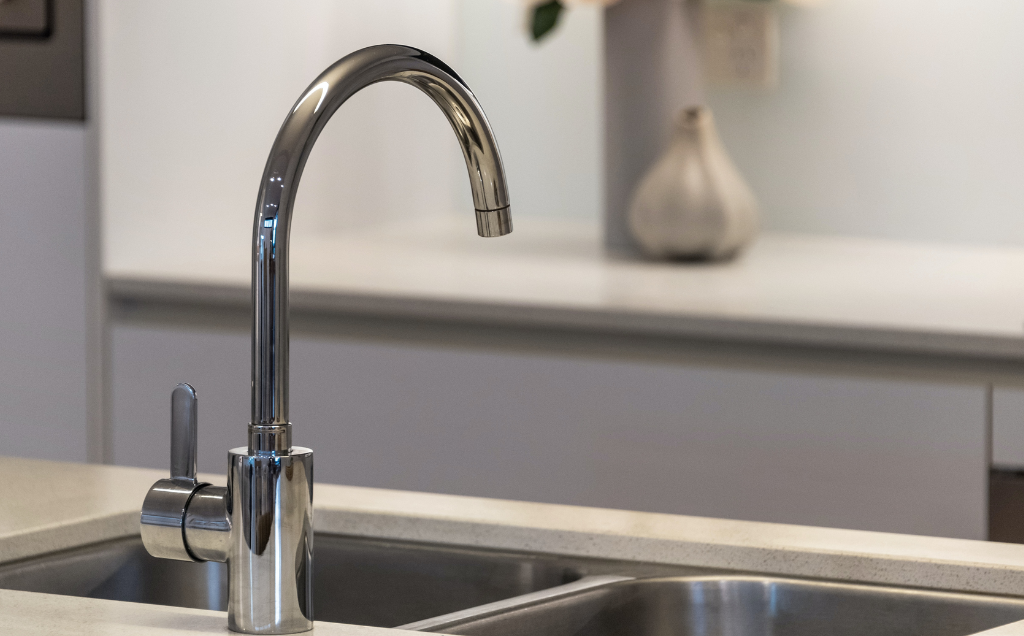
This is a step-by-step guide on how to remove and install a kitchen faucet with a few, simple tools and in a limited time.
To install a kitchen faucet, you need to get rid of the old one. Below are the steps for detaching your old faucet.
How to remove a kitchen faucet:
Clear out under the sink:
Clear away everything inside the sink cabinet first as you’ll be reclining on your back there for a while. Then cover the bottom of the cabinet with an old towel to prevent stepping on chemical residue as you work.
Turn off the water and disconnect the hose:
Turning off the water is the first thing you need to do. Hot and cold-water pipes with shutoff valves on the front or top should emerge from the wall in pairs. Typically, the left one is hot and the right one is cool.
If you have a single pipe with a splitter like this one, it can deliver cold water to a refrigerator in addition to the faucet. In this case, the pipe leading to the faucet needs to be turned off only. Therefore, trace the path of each pipe to determine which one is leading towards the faucet. Rotate the knobs clockwise to close them tightly.
Disconnect the hose that leads to the faucet once the water has been turned off. Make sure you have a bucket on ready to capture any spills of water!
Loosen the nut under the faucet:
Check the connection between the faucet and the underside of your sink. A U-shaped bracing should be fastened to the sink with a nut. To lose the nut, spray some of the Liquid Wrench penetrating oil before you try to wrestle it off.
Now you can use a basin wrench to remove the nut.
Clean the holes in the sink:
Pull out the faucet from the top once you’ve taken out that difficult nut. Be ready to be disgusted by the filth underneath! Fear not—that is a mold-free, disintegrating black foam seal!
It’s time to put the new kitchen faucet in after cleaning the sinkholes!
How to install a kitchen faucet:
Install the deck plate (optional):
Some faucets can be used with a kitchen sink that has three holes or only one hole. The extra holes, which are generally used for separate hot and cold temperature knobs, are covered by the deck plate that is supplied. You don’t need this item if your sink just has one hole.
You don’t need to fiddle with silicone or putty because the titeseal deck plate has a built-in seal! Even though it may be loose right now, once the faucet is installed, the whole thing is watertight.
Drop the faucet tubes through the hole:
Gather all the tubes hanging down from the bottom of the spout body and drop everything down through the center hole. Make sure the metal bracket you can see on the left side is vertical.
Secure the faucet to the sink:
Once everything is through the hole, check under your sink to make sure the bracket is now horizontal.
The nice thing is that this model tightens from above rather than using a basin wrench or faucet wrench tool! Turn the Pfister Top Pfit tool clockwise after inserting it into the faucet body. To raise the horizontal bracing all the way to the sink’s underside, it takes about a minute. When you start to experience stress, you are getting close.
Remove the tool from the faucet base when it can no longer be turned. Then, after lowering the hose through the faucet body from the faucet neck, snap the neck into position.
Connect the faucet supply lines:
You can reuse the water lines you previously removed because they are all included with the Miri faucet.
Connect the spray head line:
Connect the black supply line to the right-hand cold-water line and the red supply line to the left-hand hot water line. Before tightening the connections with an adjustable wrench, we advise covering the threads with Teflon tape.
After clicking the braided spray head line together, tighten the nut. To keep the Top Pfit tool close at hand in case you ever need to tighten or remove the faucet, you may clip it to the sprayer line or cold water line
Test for leaks:
To check for leaks, turn on the faucet and let it flow for about a minute. To check if any water is leaking out of any connections, feel all of them and tighten them as necessary. Over the following 48 hours, make sure to check a few more times to ensure everything is operating as it should. If everything is dry, you’re done!
Congratulations! You have successfully installed a new faucet.
“Still finding problems regarding removing or installing a kitchen faucet? Feel free to reach out to Residence HQ through our website or call us directly at +1 281-888-0161”